
In a first for labyrinth studies, Crete employed the high definition Cablecam wire camera system. The camera was suspended over Isabella II, allowing him and his team to monitor (non-obtrusively) the navigators as they progressed and egressed the labyrinth over a 13 hour period. The volunteers, using wireless PDA devices, in fifteen minute intervals, recorded subjective estimations on proximity to center. Each navigator also recorded a contemporaneous measure of confidence in their evaluation. The proximity estimations and confidence measures were recorded in numerical form (0-100, scalar.) Each volunteer also carried an individual GPS tracking monitor, recording and broadcasting its exact position in the labyrinth over the entire study. The positional data was fed real-time into a computer program (designed by Crete, nonetheless.) This program formed the basis for Crete's groundbreaking conclusions.
Crete's objective was to form an empirical foundation for his most recent theory, which he had mentioned briefly in a 2002 roundtable presentation at Emory University: that principles of linear algebra are applicable to labyrinth navigation and that a century old vector formula could form the basis of a mathematical predictor of labnav. Crete's hypothesis is perhaps too complicated to boil down to one sentence. At the most basic, Crete felt that principles of vector and spectral theory, and the attendant formulas for predicting eigenvalues, eigenspace, and eigenvectors, could serve as predictors for the individual navigator's subjective (yes, subjective) sense of center. Crete felt that certain areas of the non-curvular labyrinth, where vectors intersect (think junctures and quadrants), create artificial nonzero vectors, which are subliminally observable to the mind of the navigator. These factors could, in effect, boost the navigator's magnetic determination of proximity to center.
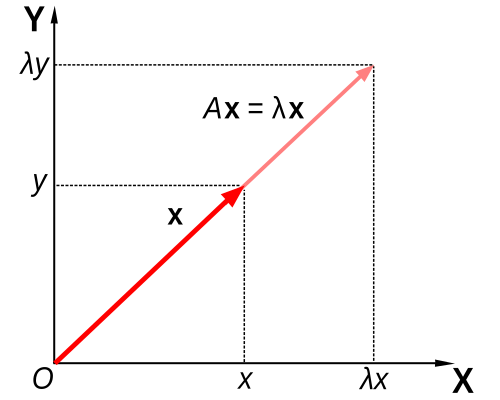
To grasp this concept, imagine a navigator walking a corridor. At this point she is observing two vectors (at the junctures of the labyrinth floor and boundary.) However, as the navigator approaches a juncture, or (even more so) a quadrant, her observable vectors increase. Crete theorized that the observation of multiple vectors could form the basis of an nonzero eigenvector (x). Accordingly, he assigned a value "x" to each juncture or quadrant in Isabella II. This factor x would then be fed into the eigen formula Ax = λx. The result would be to identify an eigenvalue. Crete predicted that the eigenvalue, once identified, effected a linear transformation on both the navigators subjective estimation of proximity to center, as well as confidence. Ostensibly, the transformation would be to increase the linear estimation of distance to center. The eigenvalue could then be compared against the navigators responses.


 Posts
Posts


