
Allow me to welcome myself back to blog posting after an extended hiatus. For the past month I have been working on the finalization of my upcoming children's fiction novel "Logan Page: Labyrinth Hunter". I would like to take a brief moment to thank my editor, Sue Wells, for all of her incredible work in the past weeks as well as the super crew of associate editors at Oak Press in New York. Also much thanks to Bryan Parsons, an incredible artist, and a genuine pleasure to work with. All contingencies aside, we are looking at an H2 release in 2009 for Logan Page. I will certainly keep everyone apprised on the final publication date. I really believe that this book might inspire an entirely new generation of labyrinth aficionados. Also, no need to worry Mom and Dad, I think you'll find something enjoyable here as well! Many of the themes of contemporary labyrinthology are neatly tucked into Logan's adventure.
With that shameless plug out of the way, let me get into the meat and potatoes of my post this evening -- something I have been wishing to write on for some time. In 2004, Stephon Crete conducted (what became) one of the most controversial studies in modern labyrinthology at the massive Queen Isabella II labyrinth, just outside of Cordoba, Spain. Using a volunteer force of 40 international labyrinth navigators, Crete investigated his theory using the highest technology methods available in modern labyrinth investigation.
In a first for labyrinth studies, Crete employed the high definition Cablecam wire camera system. The camera was suspended over Isabella II, allowing him and his team to monitor (non-obtrusively) the navigators as they progressed and egressed the labyrinth over a 13 hour period. The volunteers, using wireless PDA devices, in fifteen minute intervals, recorded subjective estimations on proximity to center. Each navigator also recorded a contemporaneous measure of confidence in their evaluation. The proximity estimations and confidence measures were recorded in numerical form (0-100, scalar.) Each volunteer also carried an individual GPS tracking monitor, recording and broadcasting its exact position in the labyrinth over the entire study. The positional data was fed real-time into a computer program (designed by Crete, nonetheless.) This program formed the basis for Crete's groundbreaking conclusions.
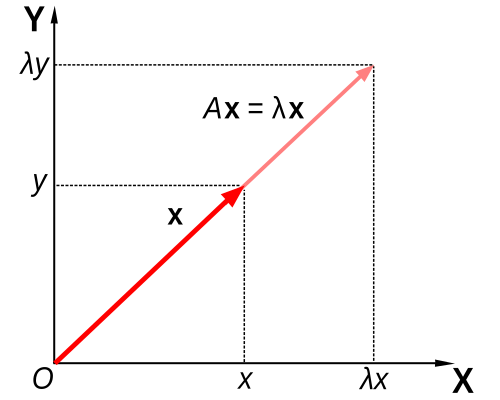
Crete's objective was to form an empirical foundation for his most recent theory, which he had mentioned briefly in a 2002 roundtable presentation at Emory University: that principles of linear algebra are applicable to labyrinth navigation and that a century old vector formula could form the basis of a mathematical predictor of labnav. Crete's hypothesis is perhaps too complicated to boil down to one sentence. At the most basic, Crete felt that principles of vector and spectral theory, and the attendant formulas for predicting eigenvalues, eigenspace, and eigenvectors, could serve as predictors for the individual navigator's subjective (yes, subjective) sense of center. Crete felt that certain areas of the non-curvular labyrinth, where vectors intersect (think junctures and quadrants), create artificial nonzero vectors, which are subliminally observable to the mind of the navigator. These factors could, in effect, boost the navigator's magnetic determination of proximity to center.
To grasp this concept, imagine a navigator walking a corridor. At this point she is observing two vectors (at the junctures of the labyrinth floor and boundary.) However, as the navigator approaches a juncture, or (even more so) a quadrant, her observable vectors increase. Crete theorized that the observation of multiple vectors could form the basis of an nonzero eigenvector (x). Accordingly, he assigned a value "x" to each juncture or quadrant in Isabella II. This factor x would then be fed into the eigen formula Ax = λx. The result would be to identify an eigenvalue. Crete predicted that the eigenvalue, once identified, effected a linear transformation on both the navigators subjective estimation of proximity to center, as well as confidence. Ostensibly, the transformation would be to increase the linear estimation of distance to center. The eigenvalue could then be compared against the navigators responses.

The results were astounding. Volunteers who recorded subjective estimations of center while in the proximity of increased vectors within the labyrinth showed a marked increase in both estimation of center and confidence. Subsequent independent analysis of Crete's data revealed that the eigen formula corresponded to an increase in subjective proximity estimations and confidence at a staggering rate of 83.2%.
As is usual with much of Crete's work, critical response to the study was also staggering. Many pointed to the sheer lack of data produced. Notably, out of the 1,300 or so recorded responses from navigators, only 5.2% were recorded at points in the labyrinth with pre-set eigenfactors. Other critics noted that at least 43% of increases in confidence and proximity, as compared to the eigenvalue predictor, were small enough to be written off as negligible, or at least within the margin of error. Finally, many felt that the underlying assumption of the study was flawed: that the navigators actually observed these vectors. Crete has thus far responded to little of this criticism, apparently dismissing much of it.
Crete has always felt that the human brain corresponds to mathematical stimuli, and his 2004 study went far to promote this new theory. Additionally, Crete's study was later publicized in an hour long documentary on Televisión Española entitled, quite simply, "Laberinto". Although the show focused generally on the field of labyrinth study, the producers utilized Crete's Cablecam footage to explain basic navigational principles to the Spanish audience. However, nearly eight minutes of the documentary was dedicated to a brief explanation of Crete's vector theory.
It has been nearly four and a half years since Crete published his findings and he has never indicated publicly whether he would conduct a follow up study. Indeed, at this point it may be extraordinarily difficult to locate educated labyrinth navigators who are completely unaware of his theory. Certainly, any subsequent study would be subject to criticism on this very point. Regardless, Crete's vector theory remains one of the most challeging and dynamic labnav studies in the past decade. Stephon Crete remains a force in modern labyrinthology and we eagerly await any news of his future projects.



 Posts
Posts


